
How to Vet Eco Friendly Brands Before You Buy
Last Updated: November 7, 2026
Quick Summary
To vet eco friendly brands, score each one against a short checklist covering named materials, specific packaging, certifications with registration numbers, dated goals, and a real contact address. Then verify every certification in the certifier's own public registry, confirming scope, status, and expiry. A brand that fails three or more checklist items is a pass.
- A brand that fails three or more checklist items is a pass.
- Real certifiers never let brands design their own badge, and their registries are publicly searchable.
- Confirm certification scope, status and expiry, since a badge rarely says which product it covers.
- A page with twenty vague claims is weaker than one with three specific ones.
- Email support one narrow question; a brand answering in plain words is usually telling the truth.
Table of Contents
- Start With a Sustainable Brand Checklist
- How to Spot Greenwashing in Product Claims
- Eco-Friendly Product Certifications That Carry Weight
- How to Verify Sustainability Claims Before You Subscribe
- Frequently Asked Questions
Start With a Sustainable Brand Checklist
Learning how to vet eco friendly brands starts with one habit: score the brand before you spend, and keep a short list of vet eco friendly brands you already trust. Vague "green" language is everywhere and proof is rare, so a short checklist helps.
Here is the checklist we use:
- Does the brand list materials or ingredients by name?
- Is the packaging described in specific terms?
- Are certifications named, with a registration number?
- Does the brand publish goals with dates attached?
- Can you find a real address or contact route?
- Does the brand explain where its ingredients come from?
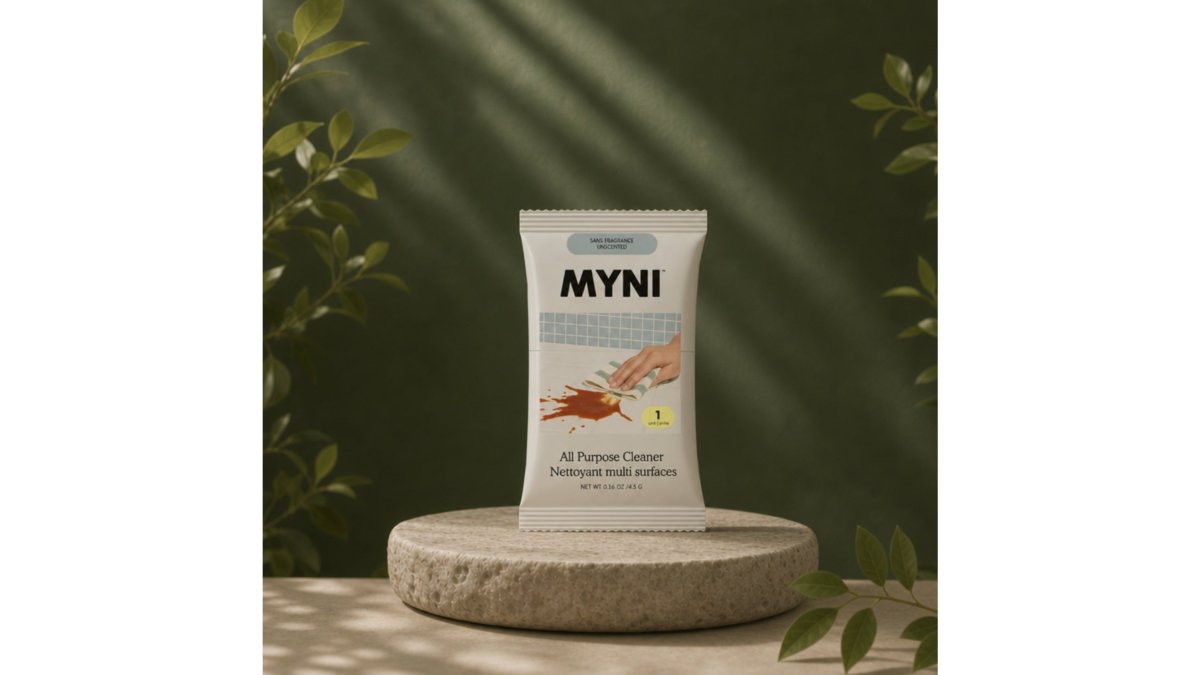
A brand that fails three or more is a pass. For a concrete example to test against your criteria, see this All-Purpose Cleaning Tablet - Unscented.

How to Spot Greenwashing in Product Claims
Greenwashing is marketing that makes a product sound greener than the evidence supports. Spot it by asking: can this claim be checked by someone outside the company?
Most cannot. Watch for these tells:
- Words like "natural," "clean," or "eco" with no definition
- Leaf and earth imagery doing the work of proof
- A single green feature hiding a wasteful whole
- Claims about one ingredient while ignoring the rest
- No dates, no numbers, no named certifier
A common mistake is trusting a badge on a package. Badges are easy to design. Registration numbers are not.
To practice, read a real product page and mark every claim you could verify. Our Laundry Leaf detergent sheets show the difference between a vague promise and a stated one.

Eco-Friendly Product Certifications That Carry Weight
Eco-friendly product certifications are independent programs that check claims against published standards. Trustworthy ones share three traits: a public standard, an outside auditor, and a searchable registry.
Look for these certification families:
- B Corp certification for overall social and environmental performance across the whole company
- Fair trade marks for labor and sourcing on specific products or ingredients
- Recycled content certification for material claims such as post-consumer recycled fiber
- Organic certification for agricultural ingredients
Then verify by searching the certifier's own registry for the brand name. If it is not listed, the logo means nothing. Watch for brands still displaying a mark after letting certification lapse.
Check scope, not just presence
A certification can apply to one product, one facility, or the entire company, and the badge rarely says which. Confirm three things on the certifier's site:
- Scope, does the certification cover the specific product you are buying, or only a different product line?
- Status and expiry, is the certification current, and when does it come up for renewal?
- Certificate or registration number, can you match the number on the package to the registry entry?
A brand may hold a facility-level certification for one factory while sourcing most volume elsewhere. That is not fraud, but it is not the claim the logo implies.
Detect invented seals
Some brands design their own seal and present it like a third-party mark. A real certifier never lets the brand design its own badge, and a real registry is publicly searchable. If you cannot find the certifier's name, its published standard, and a searchable database, treat the seal as marketing art.
Know what certification cannot tell you
Certification is evidence, not a verdict. Small brands often cannot afford audit fees, and a missing badge is not proof of bad practice. A certified brand can still have a weak product on durability or repairability. Use certification to confirm specific claims, recycled content, labor conditions, organic inputs, and judge everything else yourself.
If you want to practice, pick one product page and try to trace a single certification claim back to its registry entry. Our Laundry Leaf detergent sheets show the difference between a vague promise and a stated one.
How to Verify Sustainability Claims Before You Subscribe
Verification matters most before you commit to a subscription. Run these steps in order to separate claims backed by checkable evidence from claims that only sound green.
- Collect the claims. Write down every environmental or social claim from the brand's sustainability and product pages, in plain words. Note exact wording, "made with recycled materials" and "made with 100% post-consumer recycled content" are different claims.
- Sort by evidence type. A dated, measurable target with a baseline beats a slogan. A named certifier with a registration number beats a logo. A specific material or supplier name beats "eco blend."
- Check each certification against its registry. Confirm scope, status, and expiry. If the brand is not listed, the claim is unsupported.
- Look for numbers and dates. "Committed to sustainability" is not checkable. "Reduce packaging weight 30% by 2028 against a 2024 baseline" is.
- Ask one specific question. Email support with a narrow question, which facility makes the product, which certification covers it. A brand that answers in plain words is usually telling the truth.
Weigh evidence quality, not claim count
A page with twenty vague claims is weaker than one with three specific ones. Rank what you find:
- Strongest: audited certification with a registry entry, named suppliers, dated targets with baselines, third-party test results.
- Middle: specific materials or ingredients with no independent check, public goals without a baseline, brand-published impact reports.
- Weakest: undefined words like "natural," "clean," or "eco," leaf imagery, carbon-neutral claims with no methodology, and badges with no certifier.
Watch for selective disclosure: a brand publishes the metric it performs well on and omits the one it does not. Ask what is missing from the report, not just what is in it.
Accept trade-offs and uncertainty
Vetting rarely produces a perfect answer. Materials, durability, labor, emissions, and price often conflict: a recycled-content product may be less durable, a certified brand may cost more, a small local maker may have no certification. Decide which criteria matter most, weight them, and accept some uncertainty.
Apply this to anything you would reorder. Our Fresh Linen detergent sheets are the kind of repeat purchase worth checking once, then forgetting.

| Check | What to Look For | Red Flag |
|---|---|---|
| Materials | Named ingredients or fibers | "Eco blend" with no detail |
| Certifications | Registry listing with scope and expiry | Logo with no certifier |
| Goals | Dated, measurable targets with a baseline | "Committed to sustainability" |
| Sourcing | Named suppliers or regions | No supply chain info |
| Packaging | Specific material stated | "Eco-friendly packaging" |
| Evidence | Audited data or third-party test results | Unsupported percentages |
Vetting brands takes time, and most people run out of it. That is the problem we set out to solve. Nude Moose curates natural home and body care in one place, ships plastic-free products, and lets you reorder on a subscribe and save plan so you are not researching every refill. Start with one bundle, test how it fits your routine, then build from there.
Frequently Asked Questions
How can you tell if a brand is genuinely eco-friendly?
Look for specific, verifiable details rather than broad green language. A genuine brand names its materials, suppliers, and certifications, and publishes impact reporting with measurable targets. Check whether claims are backed by independent verification and whether the brand discloses trade-offs, such as higher shipping emissions for online orders. If a page only says eco-friendly or sustainable without evidence, treat it as unproven until you find documentation.
What are the signs of greenwashing?
Common signs include vague claims like all-natural or earth-friendly with no definition, images of leaves and oceans replacing data, and a single green product line promoted while the rest of the catalog stays unchanged. Also watch for hidden trade-offs, such as a product labeled plastic-free that ships in plastic tape and bubble wrap. If a brand cannot answer a direct question about sourcing or packaging, that silence is a red flag.
Which certifications should I look for when evaluating sustainable brands?
B Corp certification covers a brand's overall social and environmental performance, while Fair Trade focuses on labor practices and worker welfare. For materials, look for recycled content or organic certifications relevant to the product category. Always verify a certification on the certifying body's own website rather than trusting a logo on a product page, and check that the certificate is current and covers the specific product you are buying.
